
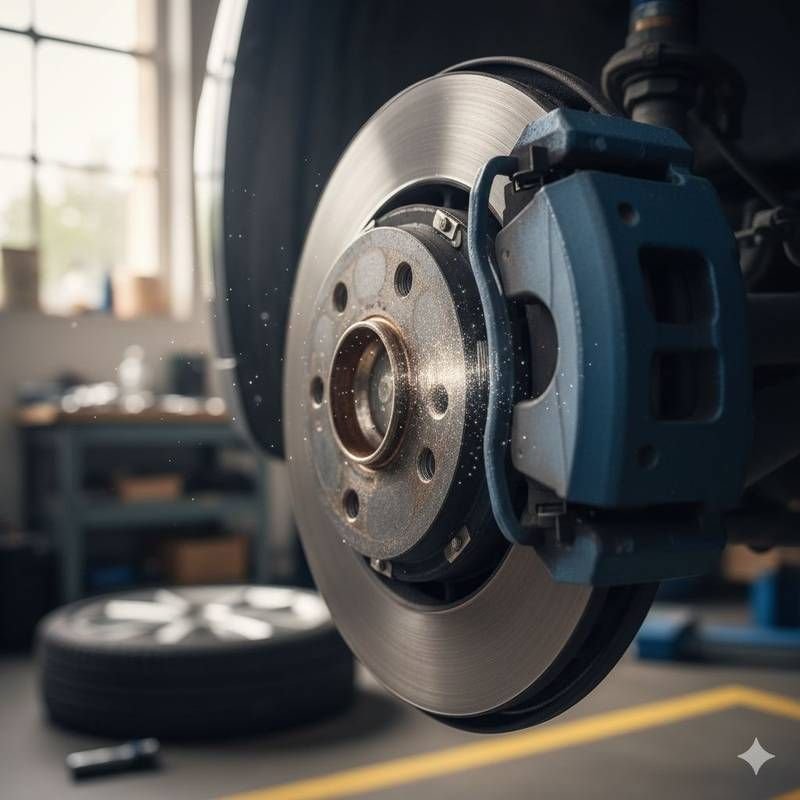
It’s a sound that can make any driver nervous. You press the brake pedal, and instead of a smooth, silent stop, you hear a squeal, a grind, or a click. Your car’s brake system is its most important safety feature, and any unusual noise is its way of telling you that it needs attention.
But what do these different sounds actually mean? As experienced mechanics, we know that not all brake noises are created equal. Some are simple warnings, while others signal a more urgent problem. In this guide, we’ll break down the most common brake noises to help you understand what your car is trying to tell you.
Understanding Different Brake Noises
Here we’ll cover the most frequent sounds and what they typically indicate.
1. The High-Pitched Squeal or Chirp
This is the most common brake noise. That sharp, metallic squeal you hear when you first press the pedal is often caused by the brake wear indicators.
- What it is: The wear indicator is a small metal tab built into your brake pads. When the pad material wears down to a certain point, this tab makes contact with the brake disc (rotor), creating that high-pitched sound.
- What it means: This is a built-in warning sign. It means your brake pads are nearing the end of their life and should be replaced soon. It’s not an emergency, but you should schedule a service appointment.
2. The Deep, Metallic Grinding or Growling
If the squeal has turned into a deep, harsh grinding sound, the situation is more serious.
- What it is: This is the sound of metal grinding against metal. It means your brake pads have worn down completely, and the metal backing plate of the pad is now grinding against the brake disc.
- What it means: This is a sound you should never ignore. It indicates that you are not only losing braking effectiveness but also actively damaging your brake discs, which can turn a simple brake pad replacement into a much more expensive repair. Stop driving and have your brakes inspected immediately.
3. A Rhythmic Clicking or Ticking
If you hear a consistent clicking sound that corresponds with the rotation of the wheel, it could be a few things.
- What it is: This can be caused by a loose brake caliper, brake pads that are shifting in the caliper, or sometimes even a small rock or debris caught in the system.
- What it means: While not as immediately dangerous as grinding, any loose component in your brake system is a safety concern. It requires a professional inspection to identify and secure the loose part.
4. A Pulsing or Vibrating Sensation
This is something you feel in the brake pedal or steering wheel more than you hear it, but it often comes with a low rumbling sound.
- What it is: This pulsing is almost always caused by a warped brake disc (rotor). Overheating from heavy use can cause the flat surface of the disc to become uneven. When the brake pads press against this uneven surface, it creates a vibrating sensation.
- What it means: Warped rotors reduce the effectiveness of your brakes, especially at high speeds. Depending on the severity, the discs may need to be resurfaced or replaced.
So, You Hear a Noise. What’s Next?
Your brakes are not something to gamble with. If you hear any of these noises:
- Don’t Ignore It: A noise is a warning. Listen to it.
- Note the Details: When does it happen? When you turn? When you brake hard or lightly? This information helps your mechanic diagnose the problem faster.
- Schedule a Professional Inspection: The only way to be certain of the cause is to have a trained technician perform a visual inspection.
At PRO AUTO MECÂNICA, your safety is our top priority. If you’re hearing any unusual noises from your brakes, don’t wait for the problem to get worse. Bring your vehicle in, and we’ll provide a thorough inspection and an honest diagnosis to get you back on the road with confidence.
For more in-depth information on automotive technologies, maintenance tips, and vehicle safety, you can refer to trusted sources like MotorTrend, Autocar, and the National Highway Traffic Safety Administration (NHTSA). These resources provide expert insights and up-to-date guidance for car enthusiasts, helping you make informed decisions and stay current with industry developments.