
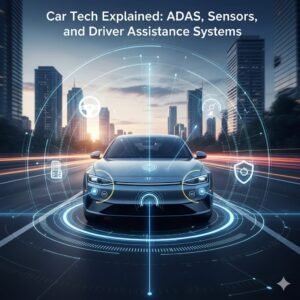
Car Tech Explained: ADAS, Sensors, and Driver Assistance Systems
Meet the invisible co-pilot in your modern car and learn how to keep it working perfectly.
Modern cars are packed with more technology than the first lunar lander. Much of this tech works quietly in the background, acting as an extra set of eyes and reflexes to make our drives safer and less stressful. This network of features is collectively known as ADAS (Advanced Driver-Assistance Systems), and it’s transforming the way we interact with our vehicles.
From beeping when you get too close to an object to automatically braking to prevent a collision, ADAS is your invisible co-pilot. But how does it all work? And, more importantly, what do you need to do to maintain it? Let’s decode the technology that’s watching out for you.
The Senses of the Car: How it Sees the World
ADAS relies on a suite of sophisticated sensors to build a 360-degree picture of the world around your vehicle. Each sensor has a specific job:
- Cameras: Usually mounted behind the windshield, cameras are the “eyes” of the system. They are excellent at identifying lane markings, reading traffic signs, and detecting pedestrians and other vehicles.
- Radar: Often hidden behind the car’s grille or bumper, radar sensors emit radio waves to detect the distance, speed, and direction of other objects. They work well in rain, fog, and darkness, making them perfect for features like adaptive cruise control and blind-spot monitoring.
- Ultrasonic Sensors: These are the small, circular dots you see on your car’s bumpers. They use sound waves to detect objects at very close range, making them ideal for parking assistance and low-speed maneuvering.
Common ADAS Features and What They Do
These sensors feed information to the car’s computer, which then enables a variety of helpful features:
- Automatic Emergency Braking (AEB): If the system detects an imminent collision with a car or pedestrian and the driver doesn’t react, it can apply the brakes automatically to prevent or reduce the severity of the impact.
- Adaptive Cruise Control (ACC): A smarter cruise control. You set a desired speed and following distance, and the car will use radar to automatically slow down and speed up to maintain that gap with the vehicle ahead.
- Lane Keeping Assist (LKA): Using cameras to watch the lane markings, this system can provide a gentle steering input to nudge you back into the center of your lane if you start to drift unintentionally.
- Blind Spot Monitoring (BSM): Warns you with a light in your side mirror if a vehicle is in your blind spot, preventing you from changing lanes at an unsafe time.
The Most Important Part: Maintenance & Calibration
This advanced technology is precise, but it’s also sensitive. The proper function of your ADAS depends on the perfect alignment and cleanliness of its sensors. This is a critical aspect of maintenance that many owners overlook.
Your ADAS Maintenance Checklist
- Keep Sensors Clean: This is the easiest and most important thing you can do. Regularly clean your windshield in front of the camera, and wipe off any dirt, mud, snow, or ice from the radar panels on your grille and the ultrasonic sensors on your bumpers. An obstructed sensor can’t see, and the system will disable itself or function incorrectly.
- Professional Calibration is a Must: The sensors are calibrated to exacting standards. Any event that can alter their position—even slightly—requires a professional recalibration. This includes:
- Windshield Replacement: The camera is mounted on the windshield, so a replacement always requires camera recalibration.
- Collisions: Even a minor fender bender can knock a radar or ultrasonic sensor out of alignment.
- Wheel Alignment or Suspension Work: Changing the car’s ride height or alignment affects the angle at which the sensors view the road.
Calibration is not a DIY job. It requires specialized tools and targets to ensure the system is aimed correctly. Always use a qualified workshop that has the proper ADAS calibration equipment.
A Safer Future, with a Little Care
Advanced Driver-Assistance Systems are making our roads safer every day. They are the building blocks for the self-driving cars of the future. By understanding the basics of how this incredible technology works and the simple steps needed to maintain it, you can ensure your “invisible co-pilot” is always ready to protect you and your passengers on every journey.
For more in-depth information on automotive technologies, maintenance tips, and vehicle safety, you can refer to trusted sources like MotorTrend, Autocar, and the National Highway Traffic Safety Administration (NHTSA). These resources provide expert insights and up-to-date guidance for car enthusiasts, helping you make informed decisions and stay current with industry developments.